Thursday, 3 January 2013

2013 Nissan Altima Sedan


The 2013 Nissan Altima, introduced at the New York auto show, is being pitched into a mid-size family-sedan market that has never had as many new, competitive models.

2013 Nissan Altima Sedan

2013 Nissan Altima Sedan

2013 Nissan Altima Sedan

2013 Nissan Altima Sedan

2013 Nissan Altima Sedan

2013 Nissan Altima Sedan

2013 Nissan Altima Sedan


By the end of 2012, all of the traditional big sellers in the segment (Honda Accord, Toyota Camry, Chevrolet Malibu, and Ford Fusion) will be either new-for-2013 or freshly launched in the last year or two. And that list doesn’t even include the vehicles that are newly relevant in the market, such as the Hyundai Sonata, Kia Optima, and Volkswagen Passat. And, for good measure, a new Mazda 6 will be on sale early next year.

Nissan, which is proud to point out that its 2012 Altima outsold everything but the Camry last year, will enter the market with an all-new car that sticks to the basic parameters of its proven formula.

The new car rides on the same 109.3-inch wheelbase and grows only about an inch in overall length. It’s 1.3 inches wider than the outgoing car. It rides on a strut front and multilink rear suspension (although Nissan notes that the rear setup has been redesigned to improve handling prowess). It is powered, as it has been for years, by either a 2.5-liter inline-four or a 3.5-liter V-6, but now will be offered—at least at launch—only with a CVT automatic. (We had previously believed a manual would be available with either engine; this is looking unlikely for now or the future.)

But that 2.5-liter gets a 7-hp bump to an estimated 182, while dropping 11 pounds of mass. A substantially reworked CVT (70 percent of its parts are new for a 40-percent reduction in internal friction) helps deliver an estimated 15-percent improvement in fuel economy when mated to the four-cylinder. It helps improve fuel economy by 10 percent when mated with the carry-over 270-hp V-6. The end result, estimates Nissan, is class-leading fuel efficiency of 27 mpg city and 38 mpg highway. That’s higher than Chevrolet’s light-hybrid Malibu Eco. The V-6 models are estimated to return 22/30 mpg, city/highway.

Overall, the Altima sedan has dropped 79 pounds of curb weight, according to the company, which would make it one of the lightest in the class. The car certainly doesn’t look light, though. Its increased width and curvaceous, almost chunky, body makes it appear substantial. The new look mixes stylistic elements from throughout the Nissan family: a little Infiniti G37 in its surfacing, some Maxima in its headlights and undulating flank, and, from the Ellure concept sedan shown at the 2010 Los Angeles auto show comes a big, chrome-framed grille.

The body is stiffer thanks to greater use of high-strength steel, a new front strut-tower brace and additional structural support aft of the passenger cabin. And the body has a claimed five-percent-lower coefficient of drag. The smoother shape and increased sound-deadening material have quieted the newly designed cabin. Predictably, Nissan says the cabin is nicer than in previous versions of the car. It features a bevy of standard and optional electronics; this includes a four-inch, reconfigurable color display between the analog gauges that can display audio system settings, instant MPG, trip-computer readouts, and turn-by-turn navigation directions. And in a moment of real cuteness, the pictogram of the car displayed on the screen can be matched to the actual color of the individual car.

The Altima will be offered with a bevy of so-called driver aids (which we reckon should probably be thought of as people-who-shouldn’t-really-be-drivers aids) including blind-spot warning, lane-departure warning, and something called moving-object detection. The last two of those use a rear-mounted camera to either watch lane markers for the lane-departure system or, well, detect moving objects behind the car and warn the driver while backing up.

Not enough electronics for you? The Altima also offers Active Understeer Control, which grabs the inside front brake to point the nose to the inside of the corner before the car noticeably understeers. So think of it as a first, allegedly undetectable, line of defense before the standard stability-control system is needed.

The seats, says Nissan, are “NASA-inspired ‘zero-gravity’” units, which we take to mean that you should restrain yourself with a seatbelt at all times.

The new sedan will be built in Smyrna, Tennessee, and Canton, Mississippi, and available in base-level, S, SV, and SL trims with the 2.5-liter, and S, SV, and SL versions with the V-6.

Nissan will continue to produce the currently available Altima coupe through the 2013 model year. Eventually, the company will introduce a two-door version of this new car. A second-gen hybrid version—this time using Nissan’s own technology—also is in the works.

Articles Source : caranddriver

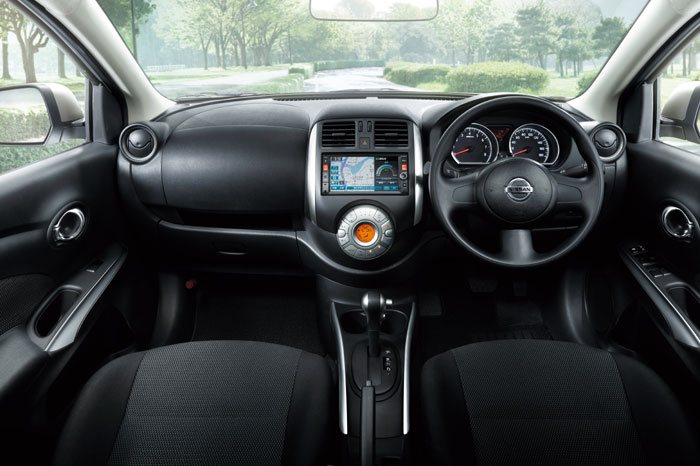
2013 Nissan Almera


The all-new Nissan Almera, launched at the 2012 Moscow International Autosalon, has been designed specifically to meet the unique demands of the Russian market.

2013 Nissan Almera
2013 Nissan Almera

2013 Nissan Almera
2013 Nissan Almera


It combines exceptional roominess and genuine refinement with a robust chassis and proven drivetrain, while the design mixes contemporary Nissan styling cues with classic features to create a modern yet timeless look.

In addition to its size, features and its Japanese badge, the new Nissan Almera will also be a highly affordable, rational and aspirational purchase matched by an unequalled ownership experience.

The car will be built on a newly installed line in Togliatti operating in full compliance with global production standards.

"We have ambitious expansion plans in Russia and the new Almera will play a central role in that growth," said François Goupil de Bouille, Managing Director, Nissan Russia.

"To create the car we have taken the best engineers from Japan, Europe and Russia and immersed them in the specific demands of the region. The new Nissan Almera is a Russian car through and through, but one which benefits from the engineering and design expertise developed by Nissan globally. It is perfectly in tune with the needs and expectations of Russian consumers," he added.

Prices - which will be announced nearer to its on-sale date in early 2013 - will be highly competitive. "When the prices are revealed, everyone will see what an exceptional offering this is, " said François Goupil de Bouille. "New Almera offers the interior space expected by a D-segment car but at a B-segment price."

The new Nissan Almera in detail

Nissan Almera is a classic four-door, five-seat saloon with a timeless body design showing clear Nissan DNA. The long wheelbase helps to create a spacious cabin while the roomy luggage area is cleverly disguised by the sweep of the roofline and rear window which blends into the trunk lid.

At the front, Nissan's familiar wide four bar grille is chromed - as are the door handles - to underline the quality image. But showing the attention to detail that has helped to create the new Almera, the chrome incorporates anti-corrosion technology which was specially developed by Nissan.

It has a unique trivalent chrome compound which withstands attack from the chemicals used to de-ice the roads in Russia to maintain the premium chrome look.

Biggest interior in the class

Four wide-opening doors allow easy access to the interior which is notably larger than class rivals. In fact, the rear compartment knee room is actually more generous than that offered in some premium D segment cars and is easily capable of carrying three adults in comfort. As well as providing more interior space than rivals, at 500 litres Nissan Almera's luggage trunk is among the largest in its class.

The luggage area itself is another example of the care that has gone into the car's design. A wide opening lid reveals a deep and practical load space, free from obstructions - the trunk lid hinges, for example, are hidden while the tool roll and jack are also stored away so as not to interfere with the load space.

A handle mounted on inside the lid means the trunk can be closed without the need to touch the invariably dirty exterior of the car. And under the boot floor, there's ample space for the full sized spare wheel.

Nissan Almera is 4,656mm from bumper to bumper and has the longest wheelbase in the class, a full 2,700mm.

Proven, robust chassis

Integral to Nissan Almera's capability to withstand the local conditions is its chassis. Almera's enhanced chassis features a strong strut-type front suspension allied to a rear beam axle.

A front anti-roll bar improves handling performance while the bar, the rear beam axle and the coil springs have all been stiffened to provide a highly comfortable ride allied to an inherent strength to ensure the car can withstand the conditions.

During test development, engineers from Nissan Technical Centre Europe (NTCE) have driven hundreds of thousands of kilometres over varied roads in the region to fine tune the springs and dampers to the conditions.

At the same time, noise reduction programmes have resulted in the use of thicker steel for the platform to reduce stone chipping and splash noise, while the upper body structure has been strengthened and stiffened giving both refinement and durability improvements.

The result is a car that provides class-leading comfort and handling at the same time as being capable of withstanding severe winter conditions and meeting the needs and requirements of the Russian customers.

Underbody protection

Further proof of Nissan Almera's durability can be found under the car. Offering extra protection against poor road surfaces, the bottom of the engine bay is covered by a 2mm thick steel plate while potentially vulnerable brake and fuel pipes running under the car are also covered by a steel plate.

With a generous ground clearance of 160mm - reducing to 145mm only at the steel plate protecting the engine - Nissan Almera is, once again, one of the best in class.

Also found under the car is a small but highly effective aero deflector which improves the car's aerodynamics for better high-speed stability.

Engine/transmission

Power comes from another tried and trusted source, Nissan's proven 1.6-litre, 16-valve petrol engine developing 75kW (102hp) and 145 Nm of torque for competitive performance and economy. Nissan Almera will be available with either a five-speed manual or four-speed automatic transmission.

Winter performance is enhanced by a powerful heating and ventilation system (heated seats and door mirrors are available depending on the model grade) while cold start performance has been optimised. The wipers have been engineered to clear as much of the large windscreen as possible and are aided by a large 5-litre washer tank that needs less frequent refilling... though when it does it is easily accessible in the engine bay.

Three grades

Following established Nissan practice Almera will be available in three grades: Welcome, Comfort and top-of-the-range Tekna.

Standard equipment on Comfort models, expected to be the biggest selling grade, includes remote central door locking, heated power door mirrors, fog lamps, a trip computer and height adjustment for the driver's seat.

There are chromed accents to the air vents while the trim material is patterned. Large door mirrors are finished in body colour and the door handles and trunk finisher are chromed while the front seats are heated to provide extra comfort in winter months. Air conditioning and alloy wheels are available as options.

Top Tekna models have air conditioning as standard, along with power windows at the rear, four speakers, a leather wrapped steering wheel and 15-inch alloy wheels. The audio system is a fully integrated double-din AM/FM tuner with single disc CD player and Bluetooth connectivity for mobile phones. An Aux-in jack socket to connect a MP3 player is also standard.

The sophisticated Nissan Connect communications system is available as an option on Tekna models, making Nissan Almera the only car in its class available with a fully integrated navigation system.

Nissan Connect has a five-inch full colour touch screen with 2D/3D mapping and voice guidance. Updates can be downloaded from the Internet and uploaded to the system via USB. The audio system includes a single disc CD player, an AM/FM tuner, an Aux-in jack and Bluetooth connectivity for mobile phones and audio streaming.

All grades have active and passive safety features including anti-lock brakes, plus driver and front passenger airbags as standard.

The colour palette has seven exterior body colours - a solid white and six metallic shades.

The Almera customer

The typical Nissan Almera buyer will be a family man living in the regional cities. He is making his way up in society and at work and aspires to owning a car with a foreign badge yet retains a rational outlook on life. Nissan Almera will be his introduction to the Nissan brand and the Nissan ownership experience and will be used for commuting to work during the week and for extended family dacha trips at the weekend.

He will appreciate its premium styling and undeniable roominess at the same time as being reassured by its ability to cope with local conditions.

"The new Nissan Almera is an important car for Nissan and an important car for Russia. It brings a new dynamic to the vital mainstream market by offering an upscale feel and D-segment spaciousness but at a B-segment price. And by generating jobs on the production line and in the supplier chain, Nissan is investing in the country's future.

"We have gone to great lengths to create a car that will not only appeal to the increasingly more discerning Russian consumer in terms of looks, equipment and quality but one that will also cope with the unique demands of the market, the weather and the local road conditions," said François Goupil de Bouille.

"Almera is designed to meet new standards and new ambitions of consumers. It's unexpectedly spacious, exceptionally comfortable and built to last," he added.

Articles Source : Netcarshow

2013 Nissan 370Z


If it's February in Chicago, it's time for one thing - sports cars. Bringing a taste of hot performance to the Windy City winter, Nissan debuted the revised 2013 Nissan 370Z on the floor of the 2012 Chicago Auto Show. The new Z®, which is scheduled to go on sale at Nissan dealers nationwide next June, features a number of enhancements designed to keep the legendary sports car fresh and exciting. For 2013, the Nissan 370Z will once again be available in Coupe, Roadster and NISMO Z configurations.

2013 Nissan 370Z
2013 Nissan 370Z

2013 Nissan 370Z
2013 Nissan 370Z

2013 Nissan 370Z
2013 Nissan 370Z


The updates for the new model year include:
  • Refreshed front fascia with vertical LED daytime running lights
  • Red reflector added to rear fascia (replaces previous black center cover)
  • Revised 19-inch aluminum-alloy wheels (Sport Package equipped models)
  • New 18-inch wheels for 370Z Coupe
  • Red-finished brake calipers (Sport Package equipped models)
  • Dark-finish fuel gauge trim
  • Euro-tuned shock absorbers (Sport Package equipped models)
  • And two new exterior colors - Magma Red and Midnight Blue


The NISMO 370Z also adds a new Bose® Premium Audio Package with two additional speakers and two subwoofers, premium gun metallic dark-finish 19-inch wheels, and Nissan GT-R style high-rigidity brake hoses and performance brake fluid. The NISMO 370Z does not adopt the new front fascia/rear reflector, Euro-tuned shocks or Midnight Blue exterior color.

"Since the original 1970 Z® was first introduced our goal has always been to keep the design moving forward. The changes for 2013, though subtle, go a long way in enhancing its dynamic appearance inside and out," said Al Castignetti, vice president and general manager, Nissan Division, Nissan North America, Inc.

As in 2012, the 2013 370Z Coupe and 370Z Coupe Touring will each be available with a standard 332-horsepower 3.7-liter DOHC V6 engine and choice of 6-speed manual transmission or a 7-speed automatic transmission. The 2013 370Z Roadster and 370Z Roadster Touring will be offered with the same engine but with the 6-speed manual offered only with the Touring model (the 7-speed automatic transmission is available with both).

The Nissan NISMO 370Z, a tuner-Z® enthusiast's dream, will once again cap off the lineup - offering racing-inspired exterior and interior styling, a specially tuned suspension and unique super-lightweight forged alloy wheels. Its 3.7-liter DOHC V6 engine is matched with an exclusive H-configured exhaust system design, muffler tuning and optimized ECM (Engine Computer Module) control - creating 350 horsepower and 276 lb-ft of torque. Only one transmission is available, a close-ratio 6-speed manual transmission with standard SynchroRev Match®, which allows rev-matched heel-toe-like downshifting.

Articles Source : Netcarshow

2014 Bentley Continental GT Speed Convertible


Bentley Continental GT Speed Convertible, the new open-top performance flagship of Bentley - and the world's fastest four-seat convertible - makes its international debut at the 2013 North American International Auto Show, Detroit.

2014 Bentley Continental GT Speed Convertible

2014 Bentley Continental GT Speed Convertible

2014 Bentley Continental GT Speed Convertible

2014 Bentley Continental GT Speed Convertible

2014 Bentley Continental GT Speed Convertible

2014 Bentley Continental GT Speed Convertible


The new Bentley Continental GT Speed Convertible combines the sensory pleasures of roof-down luxury touring with the shattering performance of a 625 PS (616 bhp) twin-turbocharged 6.0 litre W12, while delivering a fifteen per cent improvement in fuel efficiency. The close-ratio eight-speed transmission, uprated and lowered suspension and retuned steering provide exhilarating acceleration and sharp, communicative handling without detriment to the renowned ride comfort of Bentley's Continental convertible. Permanent all-wheel drive ensures optimum traction and power delivery whatever the road conditions.

Taking its place at the pinnacle of the Bentley Continental range, the new GT Speed Convertible has a top speed of 202 mph (325 km/h) and in true Bentley style, no compromises have been made in craftsmanship, luxury or refinement to deliver this unrivalled performance.

Subtle sporting design cues include exclusive 21-inch alloy wheels, dark-tint grilles and 'rifled' exhaust tail pipes. Inside its handcrafted cabin, the GT Speed convertible features the Mulliner Driving Specification as standard, blending contemporary luxury with a distinctly sporting character.

Commenting on the new Continental GT Speed Convertible, Bentley Chairman and Chief Executive Dr Wolfgang Schreiber said: "Following the recent successful introduction of the GT Speed, the new GT Speed Convertible will appeal to drivers who seek the sensory thrills of the world's fastest four-seat soft-top and the practicality of a year-round grand tourer, together with unrivalled levels of luxury and refinement. It is designed for those who accept no compromise."

Powertrain: 12 cylinders, 625 PS (616 bhp) and 8 gears

The Bentley Continental GT Speed convertible shares its powertrain specification with its Bentley stablemate the GT Speed coupé. The 625 PS (616 bhp) twin-turbocharged, 48-valve, W12 engine powers the new convertible to 60 mph in 4.1 seconds (0-100 km/h in 4.4 s.) and onto a top speed of 202 mph (325 km/h). Nought to 100 mph (160 km/h) is despatched in only 9.7 seconds. Peak torque - an impressive 800 Nm (590 lb.ft) - is reached at just 2000 revs/min and maintains that level through to 5000 revs/min for effortless, refined performance at all times.

The latest ME17 engine management system, capable of performing 180 million individual calculations per second, provides enhanced turbocharger control and torque management, enhancing driveability. In common with all W12-engined models, the GT Speed convertible features an energy recuperation system. Together with a close-ratio, quick-shifting eight-speed transmission, this has resulted in a 15 per cent improvement in fuel economy and CO2 emissions compared with the first generation Speed, with a commensurate increase in tank range.

The new Bentley Continental GT Speed Convertible's powertrain is even more tractable than its Speed predecessor, and just as fuel-efficient as the new W12 Continental GT. Switching the gear selector to 'Sport' mode however demonstrates the dual personality of the new GT Speed convertible, delivering a sharper throttle response, gear-shifting at higher engine speeds and faster 'block shifting' (eg 8th direct to 4th gear) for instantly accessible acceleration. The enhanced performance is accentuated by a glorious baritone snarl from the free-breathing exhaust, a thrilling soundtrack to the magnificent powerhouse under the bonnet.

Chassis; lower, sharper and more involving

With torsional stiffness a class-leading 22,500 Nm/degree, the bodyshell of the Bentley Continental GT Speed convertible is exceptionally rigid, laying the perfect foundation for a more engaging driving experience. The aluminium double-wishbone front suspension and trapezoidal multi-link rear setup feature revised air suspension springs and dampers for improved agility and body control with little sacrifice in ride comfort.

The self-levelling system is set 10 mm lower than the 575PS Continental GT convertible. Stiffer suspension bushes ensure sharp, communicative handling, while uprated anti-roll bars optimise the handling balance. The result is improved body control under hard cornering together with greater agility and, because steering plays an essential role in feeding response and grip back to the driver, the Servotronic steering has also been recalibrated for the Speed specification.

The Electronic Stability Control (ESC) system is optimised for the new engine management system to deliver both outstanding safety and greater driver involvement. The ESC system retains the "Dynamic Mode" setting that allows increased wheel slip at higher speeds, with engine torque reinstated more quickly after a system intervention. Together, these systems give the keen driver more opportunity to exploit the full potential of the new chassis set-up and higher power output.

Exterior - the darker side of Bentley design

From outside, the Bentley Continental GT Speed convertible is distinguished by a matrix radiator grille and bumper air intakes in a dark-tint chrome finish. The 21" Speed alloy wheels are unique to this model, and are available in silver or an optional dark tint. Large, elliptical exhaust tailpipes feature a rifled interior, while a further, subtle design touch is revealed when the bonnet is opened - the black inlet manifold is unique to the Continental Speed models. As with the GT Speed coupé, the winged 'B' badge which crowns the radiator shell is set upon a black enamel background.

The front wings of the Bentley Continental GT Speed Convertible are created in superformed aluminium, their seamless form and crisply-defined body creases creating an impression of tension and muscularity. The 10 mm lower suspension and unique 21" wheels accentuate the wide, low and poised stance. Despite the supercar performance, additional spoilers are unnecessary - the gentle lip on the double-horseshoe bootlid generates all the downforce the GT Speed Convertible needs, even at over 200 mph (325 km/h).

Interior: sumptuous, exclusive luxury and advanced technology

Inside, exclusive treadplates featuring the 'Speed' legend welcome you to a four-seat cabin that features the hand-craftsmanship of the Mulliner Driving Specification, with its distinctive diamond-quilted hide upholstery. For the Continental GT Speed models Bentley offers an exclusive Dark Tint Aluminium 'engine spin' finish, inspired by the dashboards of the Le Mans winning Bentleys of the 1920s. Its understated shade is the perfect complement to the exterior's dark tint chrome radiator and bumper grilles. Other optional finishes include the full range of fine wood veneers and a satin-finish Carbon Fibre option for fascia and centre console.

The infotainment system features Bentley's latest software upgrades, which vary from region to region but include refinements such as point of interest mapping, optional satellite landscape imagery, live traffic data and, where the infrastructure supports it, digital radio. The system features 15 Gigabytes of available music space, as well as the facility to play music via an iPod, MP3 player, the car's own six-disc CD changer or SD card.

Flat panel Balanced Mode Radiator (BMR) speakers, which combine the functions of separate tweeter and midrange speakers in one unit, direct the sound with accuracy and provide greater clarity across the audible spectrum. Alternatively, the audiophile Naim for Bentley system, incorporating custom-built speakers and eight individual Digital Sound Processing modes, is available as an option. As a thoughtful touch, the audio balance settings automatically alter when the roof is lowered to compensate for the change in listening environment.

The thrill of the open road, 365 days a year

The new Bentley Continental GT Speed Convertible offers the luxury and refinement of a coupé yet transforms into a head-turning open tourer at the touch of a button. The four-layer hood ensures high levels of refinement and acoustic insulation. Exhaustively tested in all conditions from -30°C to +50°C or more, it resists even monsoon-force rain and maintains comfortable, draft-free warmth even on the coldest days.

Another practical feature, the neck warmer, makes open air driving an appealing and comfortable prospect even on the cooler days of spring and autumn. With the hood down, the Bentley Continental GT Speed convertible offers sensational performance with the sensory amplification of open-air motoring. Hood up, it's as practical a year-round proposition as its coupé stablemate.

As with every Bentley Continental model, the GT Speed convertible offers the reassuring stability of permanent all-wheel drive, biased 60:40 in favour of the rear so the spirited driver can control the car's line with the throttle. The rear-biased torque split also minimises understeer during hard cornering while the system varies torque between the front and rear axles for optimum grip in all road and weather conditions.

The result is an exhilarating combination of performance and practicality; a Bentley that can tackle sun-drenched boulevard or snowy alpine pass with equal aplomb.

Articles Source : Netcarshow

Wednesday, 2 January 2013

2012 Renault Alpine A 110-50 Concept


The Alpine Berlinette turns 50 this year and, to mark the event, Renault has created the Renault Alpine A110-50 concept car, dedicated to performance and driving enjoyment.

2012 Renault Alpine A 110-50 Concept

2012 Renault Alpine A 110-50 Concept

2012 Renault Alpine A 110-50 Concept

2012 Renault Alpine A 110-50 Concept

2012 Renault Alpine A 110-50 Concept

2012 Renault Alpine A 110-50 Concept

2012 Renault Alpine A 110-50 Concept

2012 Renault Alpine A 110-50 Concept

2012 Renault Alpine A 110-50 Concept

2012 Renault Alpine A 110-50 Concept

So what's in a name? In some cases, the heritage of a name is like a national treasure - and that's certainly true for Alpine. Its DNA blends Renault's sporting passion and technical expertise.
  • The Renault Alpine A110-50 concept car translates the most characteristic design features of the original A110 in a modern and spectacular way.
  • The carbon-fibre bodywork features a new shade of blue which refreshes and reinterprets the famous original 'Alpine Blue'.
  • Produced wîth the renowned expertise of Renault Sport Technologies, the Renault Alpine A110-50 concept car is imbued wîth the world of motorsport. It benefits from the experience gained from the racing Mégane Trophy by using the same technical platform.


'Developing this concept car was a great adventure. It was a catalyst for creativity. We wanted to make a Berlinette that was of our time, and which boldly embodies Renault's passion for motorsport. We were guided by our hearts and emotions.' - Axel Breun, Concept and Show Car Director.

A new interpretation of a timeless designTo mark the 50th anniversary of the iconic Berlinette, Design Yann Jarsalle and Concept and Show Car Director Axel Breun reinterpreted the original design cues to include the new Renault design language introduced by Laurens van den Acker wîth the DeZir concept car, and which will soon be rolled out in the company's future models. The new front-end look, wîth the upright, confident diamond, has been adapted for this very low and wide car. The Renault Alpine A110-50 is a car of today; a bold embodiment of Renault's passion for motorsport.

'For everybody on the team, it was a dream come true to work on an Alpine concept car. We wanted to put this car firmly in the modern day, while resonating wîth its heritage' - Laurens van den Acker, Senior VP, Corporate Design.

The Renault Alpine A110-50 concept car translates the most characteristic design features of the original A110 in a modern and spectacular way with:
  • the sculpted forms of its elegant, flowing bodywork, enhanced by lights over which air seems to flow effortlessly.
  • the half-domed additional lamps, wîth a technical but nostalgic interpretation, thanks to full LED yellow lighting - as it should be!
  • a characteristic 3D rear window, which reveals the mid-rear engine.
  • air intakes on each side echo the ducts on the rear wheel arches of the Berlinette. The right-hand opening is for gearbox cooling, the left is for the engine bay.


Produced by Faster, the carbon-fibre bodywork features a new shade of blue which refreshes and reinterprets the famous original 'Alpine Blue'. Every opening panel does so wîth dynamics worthy of the finest GTs, wîth the bonnet hinged at the front and the engine bay cover opening towards the rear. The doors feature a scissor motion.

'The car is very curvy, like the Berlinette, while expressing the three key words of our new design policy: simple, sensual and friendly' - Axel Breun.

A competition-focused cockpit

As you climb into the driving seat, the eye is drawn to the carbon-fibre sills. Everything inside this two-seater expresses build quality and sportiness, wîth black dominant.
  • the driver's seat features embroidered 'Renault Alpine A110-50' badging, Sabelt full harness belts and different, attractive shades of blue.
  • the dashboard is particularly uncluttered. The Renault Design-created §teering wheel incorporates a colour screen and houses the same technology as a Formula Renault 3.5 single-seater to provide drivers wîth all the information they need.
  • Racing driver equipment is provided by Sabelt and the helmet is created by Ruby.


A true prototype

Produced wîth the renowned expertise of Renault Sport Technologies, the Renault Alpine A110-50 is imbued wîth the world of motorsport. It benefits from the experience gained from the racing Mégane Trophy by using the same technical platform. Acclaimed by drivers in the World Series by Renault, the tubular chassis of the Renault Alpine A110-50 has been stiffened and undergone several developments. The roll cage and bracing in the engine bay have been modified (lowered) in the workshop of Tork Engineering to adapt them to the vehicle's height, which is lower than that of Mégane Trophy. The digital design work was led by Renault Design, Koller and Etud Integral, while final assembly was carried out by Protostyle. The final weight distribution is almost ideal, wîth 47.8% over the front wheels.

To facilitate servicing, the concept car features integral pneumatic jacks. Derived directly from the systems seen in endurance racing, they allow the wheels to be changed extremely quickly.

An exceptional car that fuses elegance and aerodynamic efficiency

The efficiency of the Renault Alpine A110-50 concept car is largely generated by ground effect. At the front, a splitter hidden in the bumper generates low pressure, which results in significant aerodynamic downforce. At the rear, a diffuser accelerates air flow beneath the floor. Ground effect therefore accounts for more than one-third of the car's downforce, wîth the rest coming from an adjustable rear wing.

The research and design of this air flow was conducted using Computational Fluid Dynamics, a cutting-edge technology used particularly in F1. CFD involves studying movements of a fluid, or their effects, by resolving digitally the equations which govern the fluid. This technique was used by Renault Sport Technologies primarily in order to fine-tune the aerodynamics and study the behaviour of the New Mégane Trophy as a function of air flow.

Exemplary road holding

The wheelbase of the Renault Alpine A110-50 is identical to that of Mégane Trophy (2,625mm), while the track is slightly wider at 1,680mm front and 1,690mm rear.

The 21-inch wheels, wîth a single central nut, are specific to this car and fitted wîth roadhomologated Michelin tyres.

Articles Source : conceptcarz

2013 Porsche Boxster


Lighter and more fuel-efficient, faster and more agile - with an all-new lightweight design body and completely revamped chassis, the latest generation of the Porsche Boxster is setting new top scores for Porsche Intelligent Performance.

2013 Porsche Boxster

2013 Porsche Boxster

2013 Porsche Boxster

2013 Porsche Boxster

2013 Porsche Boxster

Considerably lower weight, a longer wheelbase, a wider track and larger wheels significantly enhance the mid-engine sports car's driving dynamics yet further, already far and away the best in its class, supported by the new electro-mechanical power steering. As an additional boost to driving dynamics, Porsche offers the Sport Chrono Package as an optional extra for the Boxster, featuring dynamic transmission mounts for the first time. Also new in the Boxster is Porsche Torque Vectoring (PTV) with mechanical rear axle differential lock.

The new Boxsters boast superior performance as well as being up to 15 per cent more fuel-efficient. They boast ultra-modern, direct fuel injection, six-cylinder engines and all variants get by with less than nine litres of fuel per 100 kilometres, the Porsche Boxster with PDK even managing with less than eight litres. The most important data at a glance:

Porsche Boxster: 2.7-litre boxer engine with 265 hp (195 kW); rear-wheel drive, six-speed manual transmission, optional seven-speed Porsche-Doppelkupplungsgetriebe (PDK); acceleration 0 - 100 km/h in 5.8 seconds, with PDK in 5.7 seconds (5.5 seconds with Sport Chrono Package); top speed 264 km/h, with PDK 262 km/h; fuel consumption (NEDC) 8.2 l/100 km, CO2 192 g/km; with PDK 7.7 l/100 km CO2 180 g/km.

Porsche Boxster S: 3.4-litre boxer engine with 315 hp (232 kW); rear-wheel drive, six-speed manual transmission, optional seven-speed Porsche-Doppelkupplungsgetriebe (PDK); acceleration 0 - 100 km/h in 5.1 seconds, with PDK in 5.0 seconds (4.8 seconds with Sport Chrono Package); top speed 279 km/h, with PDK 277 km/h; fuel consumption (NEDC) 8.8 l/100 km, CO2 206 g/km; with PDK 8.0 l/100 km CO2 188 g/km.

Never before in the history of the Porsche Boxster was a change of generation so comprehensive and so clearly apparent at first glance: The change in proportions is a lasting one. For example, the wheelbase has increased by 60 millimetres and the front track width by up to 40 millimetres and at the rear by up to 18 millimetres, as a result of which the wheels align flush with the body. The windscreen is flatter and set approximately 100 millimetres further forward; all in all the Boxster is up to 13 millimetres lower. Together with its convertible top line extended far to the back, the new Boxster cuts a very elegant silhouette. Another factor contributing to its sportier appearance is that the body is a mere 32 millimetres longer than before, while at the same time the overhang at the front has been reduced by 27 millimetres - the Porsche Boxster remains the compact roadster.

Typical of the enhanced design is the shoulder line, which runs from the strongly upward curving front wing into the rear side section and which also accommodates the exterior mirrors, now in the vicinity of the upper edge of the door. Particularly expressive and characteristic is the new dynamic indentation in the door, which guides the intake air to the striking intake in the rear side section: you can see where the roadster's heart beats.

The new Porsche Boxster's front-end is dominated by the large lateral radiator openings and the headlights. Both the halogen headlights, standard for the new Boxster, and the new Bi-Xenon headlights, standard for the Porsche Boxster S, were completely redeveloped. The headlights, also redesigned, with daytime driving and position lights in LED technology, are integrated above the striking air intakes.

The rear end of the new Porsche Boxster models has been completely redesigned: there is no longer any convertible-top compartment lid, rear wing and lights are linked by a prominent edge spanning the entire vehicle width and the central lamp unit located beneath it combines the rear fog light and reversing lights in one flat strip. The new tail lights, all in LED technology, are perfectly integrated into the rear apron, with their shape curving around the corner of the car. The redesigned tailpipes complete the deep, centred look. This is further emphasised by the diffuser, which spans the width of the vehicle. A characteristic feature of the Boxster is an oval tailpipe; the Boxster S has a twin-flow double tailpipe.

Articles Source : NetcarShow

Tuesday, 1 January 2013

2013 Porsche 911 GT3 Cup


The Porsche 911 GT3 Cup is the most successful race car in the world. Since 1998, 2,395 units of the near standard vehicle for customer sport were produced. The new edition of the 911 GT3 Cup is the motorsports version of the future 911 GT3 and as such is the first race car that is based on the seventh generation of the sports car icon from Zuffenhausen. The 911 GT3 Cup will be run exclusively in the Porsche Mobil 1 Supercup in 2013. The car for one-make racing made its debut on the occasion of the end of motorsport season "Night of Champions" celebration at the R&D Centre in Weissach.

2013 Porsche 911 GT3 Cup

2013 Porsche 911 GT3 Cup

2013 Porsche 911 GT3 Cup

2013 Porsche 911 GT3 Cup

2013 Porsche 911 GT3 Cup

2013 Porsche 911 GT3 Cup


The new Porsche 911 GT3 Cup is powered by a 3.8-litre six-cylinder flat engine. It generates 460 hp (338 kW) at 7,500 revs, surpassing the predecessor by 10 hp. A six-speed dog-type gearbox developed by Porsche Motorsport which is operated via shift paddles at the steering wheel for the first time in a Porsche brand trophy race car transmits the power to the rear axle. The single piece race wheels with centre mount were also newly designed by Porsche Motorsport. The width of the Michelin race slicks was increased by two centimetres to 27 centimetres at the front and by ten millimetres at the rear axle to now measure 31 centimetres.

A newly developed race braking system further improves the excellent endurance qualities compared to its successful predecessor. The 380 millimetre slotted and inner-vented steel brake rotors at the front axle are decelerated by six-piston aluminium fixed callipers. The rear axle features a four-piston version.

During the development of the new car a particular emphasis was put on the driver safety. A newly designed safety cage protects the pilot in case of a roll or a collision as does a newly developed race seat which is distinctively shaped around the head and shoulders and can be adjusted individually with the help of padding. A rescue hatch in the roof provides easy access for primary medical attention and for the extrication of the driver.

"The new 911 GT3 Cup is much easier to drive at the limit," says Porsche works driver Timo Bernhard, who was significantly involved in the development of the new vehicle. "The car is excellently balanced. The new axle geometry is enormously positive for the handling. Apart from that the new Cup 911 is great fun to drive."

Like its predecessor the new Porsche 911 GT3 Cup is produced in Stuttgart-Zuffenhausen on the same assembly line as the road legal models. At the Motorsport Centre in Weissach it receives a general set-up for the circuit and is tested by a professional race driver before delivery to the customers. The basic price for the vehicle, which is available exclusively in white, is 181,200 Euro plus the country-specific value added tax.

Articles Source : NetcarShow
Related Posts Plugin for WordPress, Blogger...